Maternal Mental Health Alliances
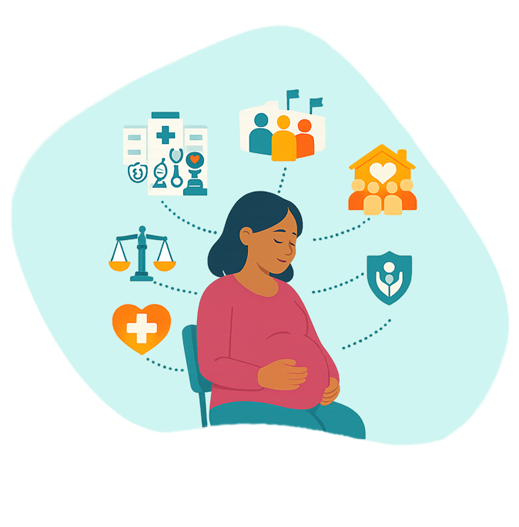
Maternal Mental Health Alliances exist globally, providing a platform for collaboration, coordination, and shared learning. They are coordinated and supported at a global level by the Global Alliance for Maternal Mental Health. Working with or creating a Maternal Mental Health Alliance in your country (if one doesn’t yet exist) can help achieve the strategic influence needed for impact.
GAMMH – the Global Alliance for Maternal Mental Health
You can learn all about Alliance at the GAMMH website: https://www.gammh.org/
Maternal Mental Health Alliances are coalitions of national organisations that represent and support women with perinatal mental health problems.
Members vary depending on the country, but often include:
- Professional bodies representing psychiatrists, psychologists, social workers, nurses, obstetricians, or midwives
- NGOs working in child health, maternity, mental health, public health, women’s rights, domestic violence, and child protection
Alliances are also often supported by marketing or campaigning professionals, researchers, and women and families with lived experience who have started to campaign or speak out about their experiences.
Search online to see if an Alliance or coalition already exists in your country. You can also contact the Global Alliance for Maternal Mental Health, which supports the development of national Alliances and advocates for investment in maternal mental health worldwide.
Setting up and managing a Maternal Mental Health Alliance requires preparation, sustained effort, and collaboration across sectors. Alliances aim to create a movement for change by systematically building and sharing evidence (including evidence from the Cost Calculator Tool) alongside a clear commitment from stakeholders to act on that evidence.
- Work with experts who understand both the technical evidence (such as economic and health data) and the policy landscape (including political priorities, decision-making processes, and timing). They should be able to guide both the use of the tool and how you share your findings.
- Where possible, work with departments or organisations, not just individuals. People change jobs, but institutional relationships provide longer-term continuity and support. The same applies when building an Alliance.