Translating economic evidence into policy
29 May 2025
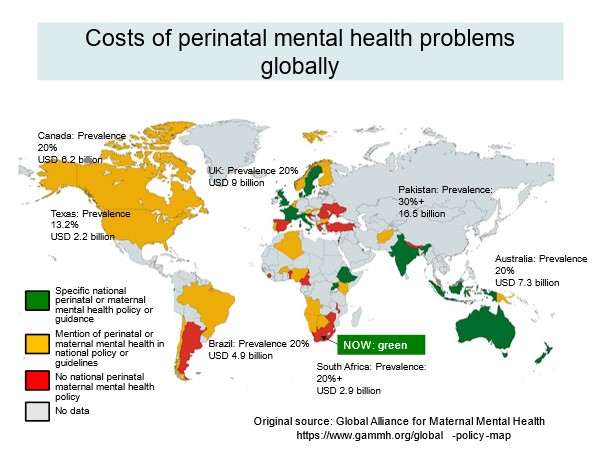
Economic evidence cannot be easily generalised from one country to another hampering therefore relevance to policy makers. Costs strongly depend on health service systems, population characteristics, socio-political environments, gender inequalities, as well as other factors. In addition, policy makers might not have the time, skills, or knowledge to engage with such evidence unless it is communicated to them appropriately. In partnership with in-country stakeholders who are experts in the topic in the cultural and political context, and who advocate for change, we seek to produce economic evidence that translates into policy change.
For example, in the UK, the Maternal Mental Health Alliance is a well-established network of over 125 organisations with expertise and dedication to influence policy change. Similarly, the Global Alliance for Maternal Mental Health, a network of international organisational and sub regional alliances, such as the African Alliance for Maternal Mental Health, disseminates evidence on the human and economic costs and evidence-based solutions to policymakers to influence change. We work closely with these Alliances and organisations promoting policy change, such as the Perinatal Mental Health Project in South Africa, or PAM Foundation in Thailand, to take our economic findings, and present them in digestible formats to policymakers – this way cost modelling is more likely to contribute to tangible change for those affected by perinatal mental health problems.